Water tank and sump level monitor
Mount the waterproof transducer at the top of a tank and log the distance to the water surface to track fill level, trigger pumps, or send low-level alerts.
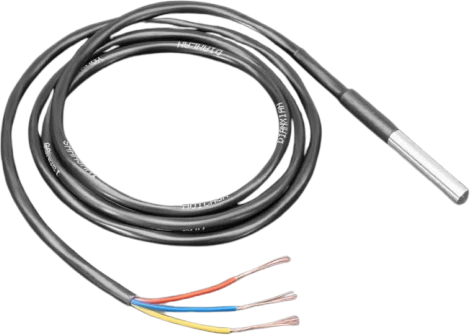
A waterproof 40 kHz ultrasonic rangefinder that measures distance with a single sealed transducer and is drop-in compatible with HC-SR04 trigger/echo code.
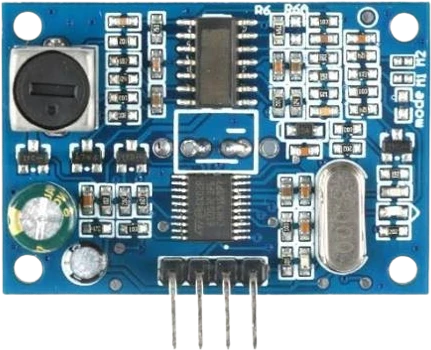
The JSN-SR04T is a waterproof ultrasonic distance module built around a single sealed 40 kHz transducer on a cable, rather than the two exposed transducers of a bare HC-SR04. The transducer face tolerates moisture and outdoor conditions while the small driver PCB stays dry, which makes it a common choice for tank levels, parking sensors, and outdoor robots. It runs from 5V and draws only a few milliamps at rest, rising to roughly 30 mA during a measurement burst.
In its default mode the module speaks the same protocol as the HC-SR04. You send a short HIGH pulse on TRIG (nominally 10 us, and a slightly longer pulse improves reliability), the module emits a 40 kHz burst, and ECHO returns HIGH for a duration proportional to the round-trip time (about 58 us per centimeter). Dividing that time by two and multiplying by the speed of sound gives the distance. Usable range runs from roughly 25 cm out to several meters, and objects closer than that near blind zone cannot be measured reliably.
The V3.0 board (Manorshi JSN-SR04T-3.0) also supports serial output modes selected by a resistor on the mode pad. With the pad left open it behaves as the standard ping/echo sensor; adding a resistor switches it to a 9600-baud serial stream that reports distance automatically or on a 0x55 command byte. Tinkered simulates the default pulse trigger and pulse-width echo behavior, so existing HC-SR04 sketches work unchanged.
| Pin | Function | Type |
|---|---|---|
VCC 5V | Power | Power in |
TRIG Trig / RX | Digital trigger: 10us pulse (or serial 0x55) | Digital input |
ECHO Echo / TX | Digital echo: pulse-width level output | Digital output |
GND GND | Power | Power in |
Verified from the Tinkered component library · Manorshi (JSN-SR04T-3.0).
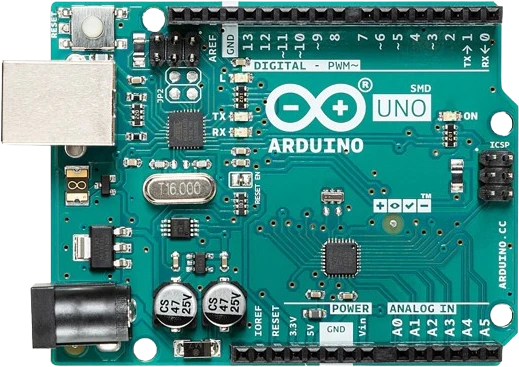
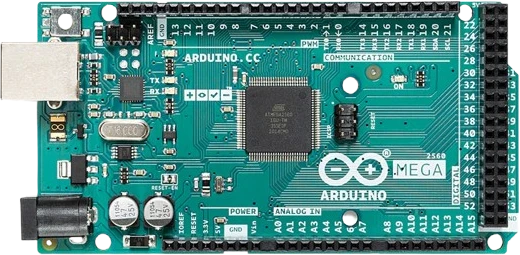
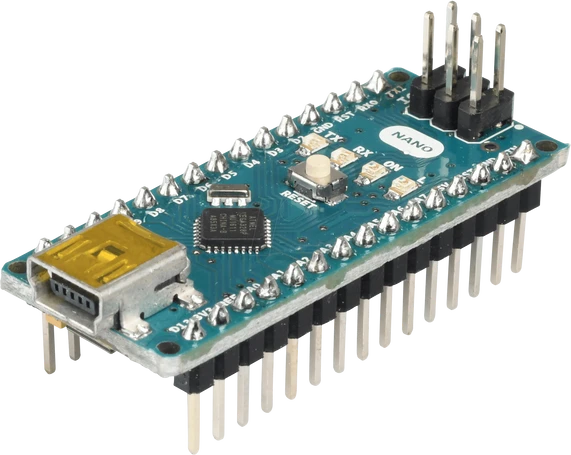
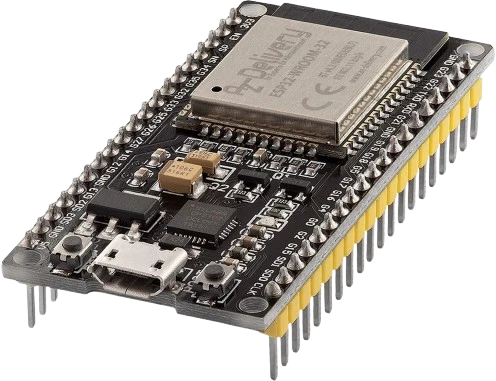
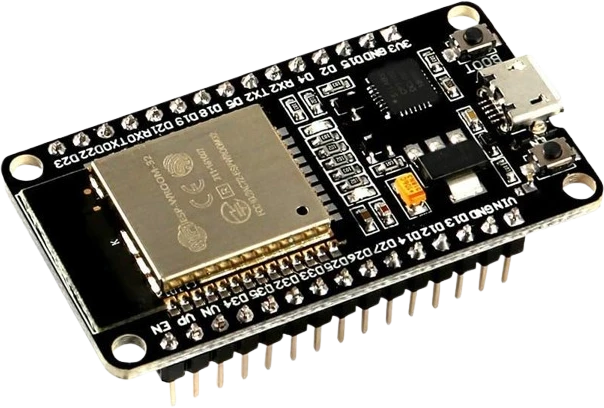
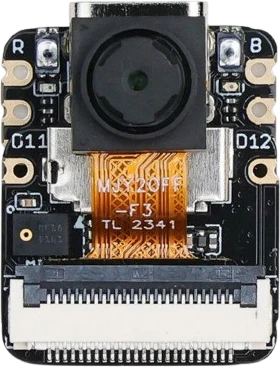
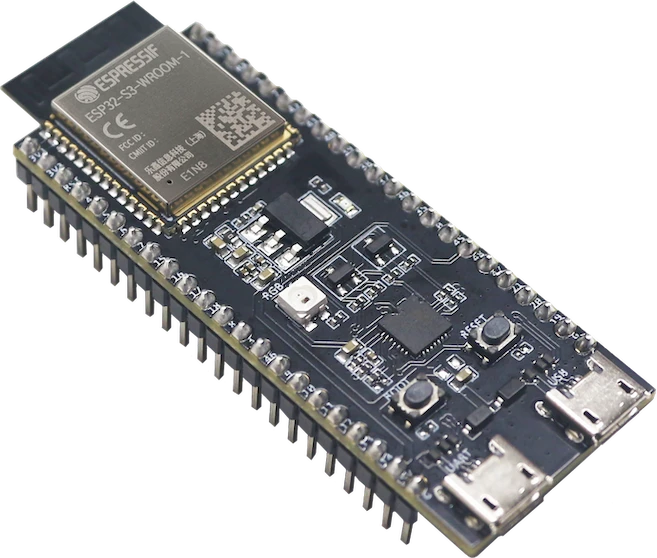
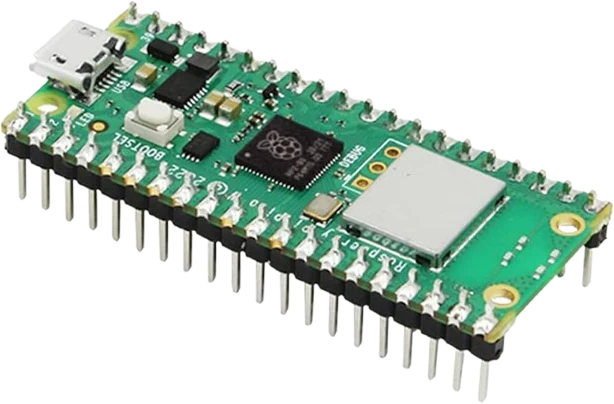
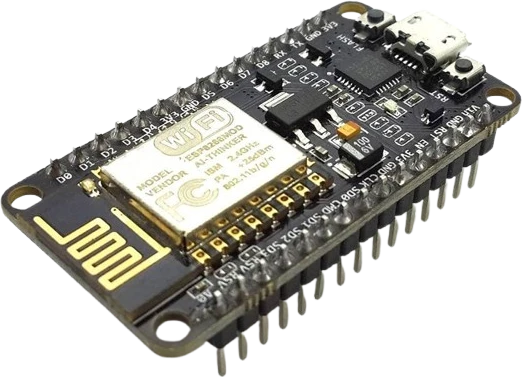
The JSN-SR04T connects to any of the microcontrollers supported in Tinkered. Mind the 5 V logic level on 3.3 V boards.
The JSN-SR04T is fully simulated in Tinkered. Wire it into a circuit, write your firmware, and read real values back with no physical hardware. Test your logic before you touch a breadboard.
Open it in the simulatorThe sensor has a blind zone of roughly 25 cm. Targets closer than that return zero, garbage, or a stuck maximum value. Mount it far enough back that your minimum useful distance stays above the blind zone.
Despite a 3.0-5.5V rating, the module is unstable at 3.3V and often returns noisy or absent echoes. Give it a clean 5V supply and level-shift the ECHO line if your microcontroller runs at 3.3V.
ECHO swings to 5V. Connecting it directly to a 3.3V GPIO can overstress the input. Use a resistor divider or level shifter on ECHO.
Each measurement pulls about 30 mA in a short burst. On a shared or long-wire 5V rail this causes voltage dips and jittery distances. A decoupling capacitor near VCC and GND fixes most of the noise.
The JSN-SR04T is compatible with HC-SR04 code, but the transducer settles differently and a 10 us trigger is sometimes marginal. Widening the trigger pulse slightly and adding a small delay between readings improves stability.
Mount the waterproof transducer at the top of a tank and log the distance to the water surface to track fill level, trigger pumps, or send low-level alerts.
Measure clearance to a wall or obstacle and drive a buzzer or LED bar that speeds up as the vehicle approaches.
Use the sealed transducer on a rover or boat to detect obstacles in rain or spray where a bare HC-SR04 would fail.
Keep the electronics dry while ranging down onto a rainwater barrel or reservoir to automate watering based on available volume.
Drop the JSN-SR04T into a circuit, write firmware, and simulate it in your browser, then deploy to real hardware. All in one editable Tinkered project.