Sous vide and water bath controller
The waterproof tip sits in the bath while the DS18B20 holds a set temperature, driving a heater relay from the reading.
Waterproof stainless steel probe housing a Maxim DS18B20 digital thermometer that reports temperature from -55 to +125 C over a single 1-Wire data line.
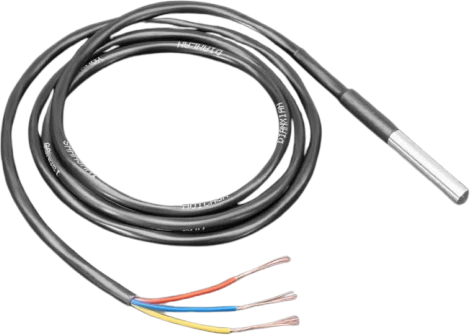
The Waterproof DS18B20 is a sealed temperature probe built around the Maxim/Analog Devices DS18B20 1-Wire digital thermometer. The sensor die sits inside a stainless steel tube on a flexible lead, so it can be dropped directly into liquids, soil, or outdoor enclosures. It measures from -55 to +125 C and is accurate to +/-0.5 C across the -10 to +85 C range.
Communication uses the 1-Wire protocol on the single DATA (DQ) line. Resolution is programmable at 9, 10, 11, or 12 bits, where 12-bit mode resolves 0.0625 C and takes up to 750 ms per conversion. Every DS18B20 carries a unique factory-programmed 64-bit ROM address, so many probes can share one data pin and be read individually by address.
The three flying leads are typically red (3-5 V power), blue or black (ground), and yellow or white (DATA). The device can also run in parasite-power mode, drawing its energy from the data line, though a normal three-wire hookup is more forgiving. On-chip TH and TL alarm registers can flag out-of-range readings without host polling.
| Pin | Function | Type |
|---|---|---|
VCC Red: 3-5V | Power | Power in |
GND Blue/Black: GND | Power | Power in |
DATA Yellow/White: DATA (DQ) | 1-Wire DQ | Bidirectional (GPIO) |
Verified from the Tinkered component library · Adafruit / Maxim Integrated.
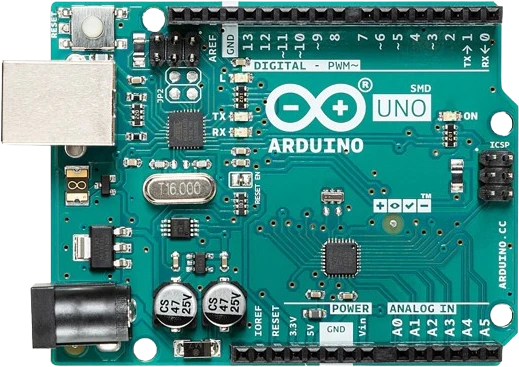
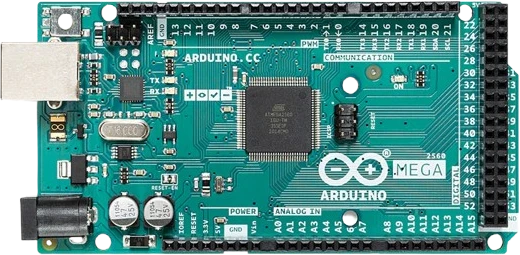
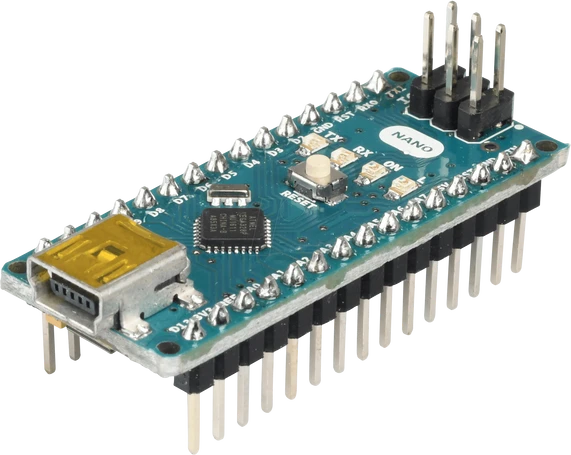
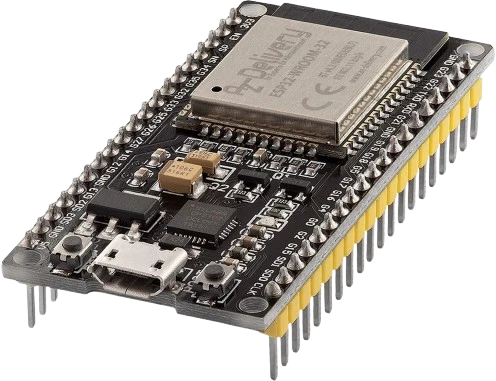
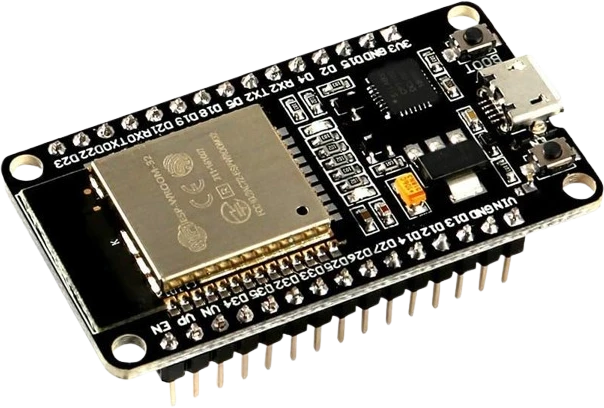
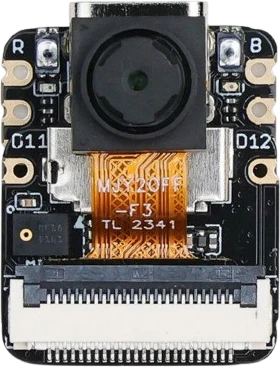
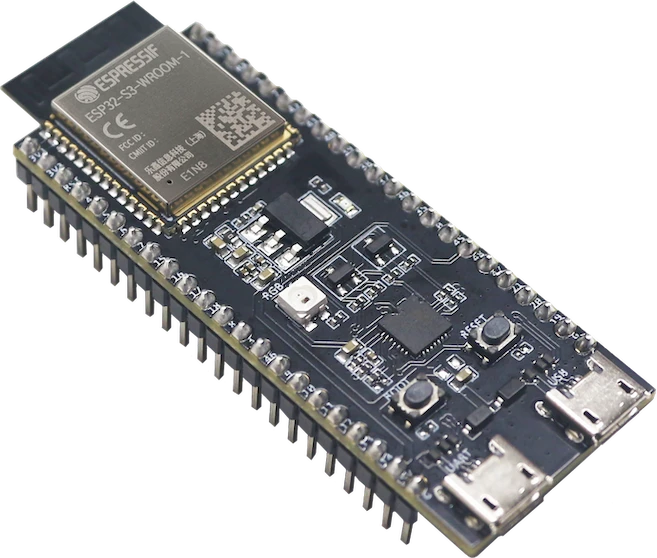
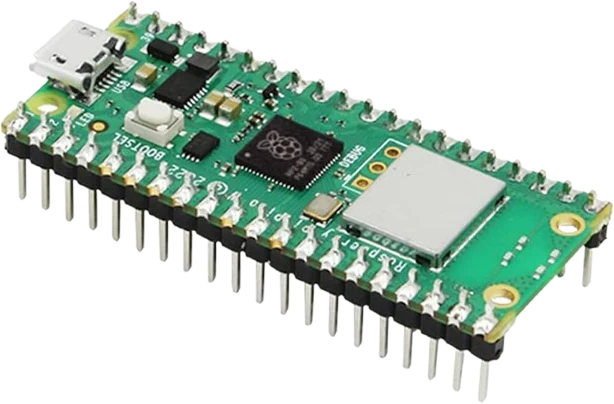
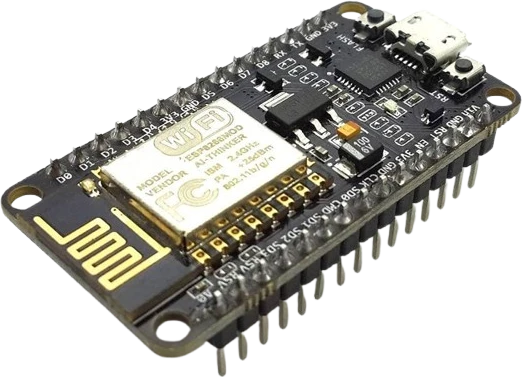
The Waterproof DS18B20 connects to any of the microcontrollers supported in Tinkered. Mind the 3.3 V logic level on 3.3 V boards.
The 1-Wire bus is open-drain and idles high through an external resistor. Without a 4.7 kOhm pull-up from DATA to VCC, reads return 85 C (the power-on default) or -127 C, which looks like a dead sensor.
A 12-bit conversion needs up to 750 ms. Requesting the temperature immediately after triggering it returns a stale or default value. Either wait the full conversion time or poll the bus until the device signals it is done.
Cable coloring is not universal. Many probes use blue for ground, but some batches use black for ground and reserve another color for DATA. Verify against the probe's own labeling before wiring, since swapping GND and DATA prevents communication.
Parasite power omits the VCC wire but demands a strong pull-up that clamps the bus high throughout every conversion. With long cables or multiple probes it becomes unreliable. Use the normal three-wire connection unless pins are truly scarce.
Because each probe has its own 64-bit ROM address, code that assumes one sensor breaks when a second is added. Enumerate the addresses on the bus and target each device explicitly instead of relying on a skip-ROM broadcast.
The waterproof tip sits in the bath while the DS18B20 holds a set temperature, driving a heater relay from the reading.
Submerge the sealed probe to log tank temperature and trigger alerts when it drifts outside a safe band.
Bury the stainless probe to record root-zone or ground temperature for gardening, composting, or greenhouse control.
Clamp the probe to a fermenter or mash tun to watch temperature through the process and keep it in range.
Chain several probes on one data pin, each addressed by its unique ROM code, to map temperatures across rooms or equipment.
Drop the Waterproof DS18B20 into a circuit, write firmware, and simulate it in your browser, then deploy to real hardware. All in one editable Tinkered project.